Kirsty Simkin, Assistant Head, SENDCo & primary science lead

A Life of Choice and Opportunity for All
At Reach Schools we know the importance of creating inclusive schools for all. Our vision is for every child, including our most vulnerable pupils, to thrive and enjoy a life of choice and opportunity. We truly believe that with the right support, every single one of them is capable of success. That can be more challenging for those pupils with what we call Additional Educational Needs (AEN). These are individuals who face additional barriers perhaps because of autism, ADHD or other neurodiverse presentations (traditionally called SEND). We believe that with the right support, high quality inclusive teaching, targeted intervention and specialist support (if needed), they too can achieve our vision.
Increasingly Diverse Classrooms
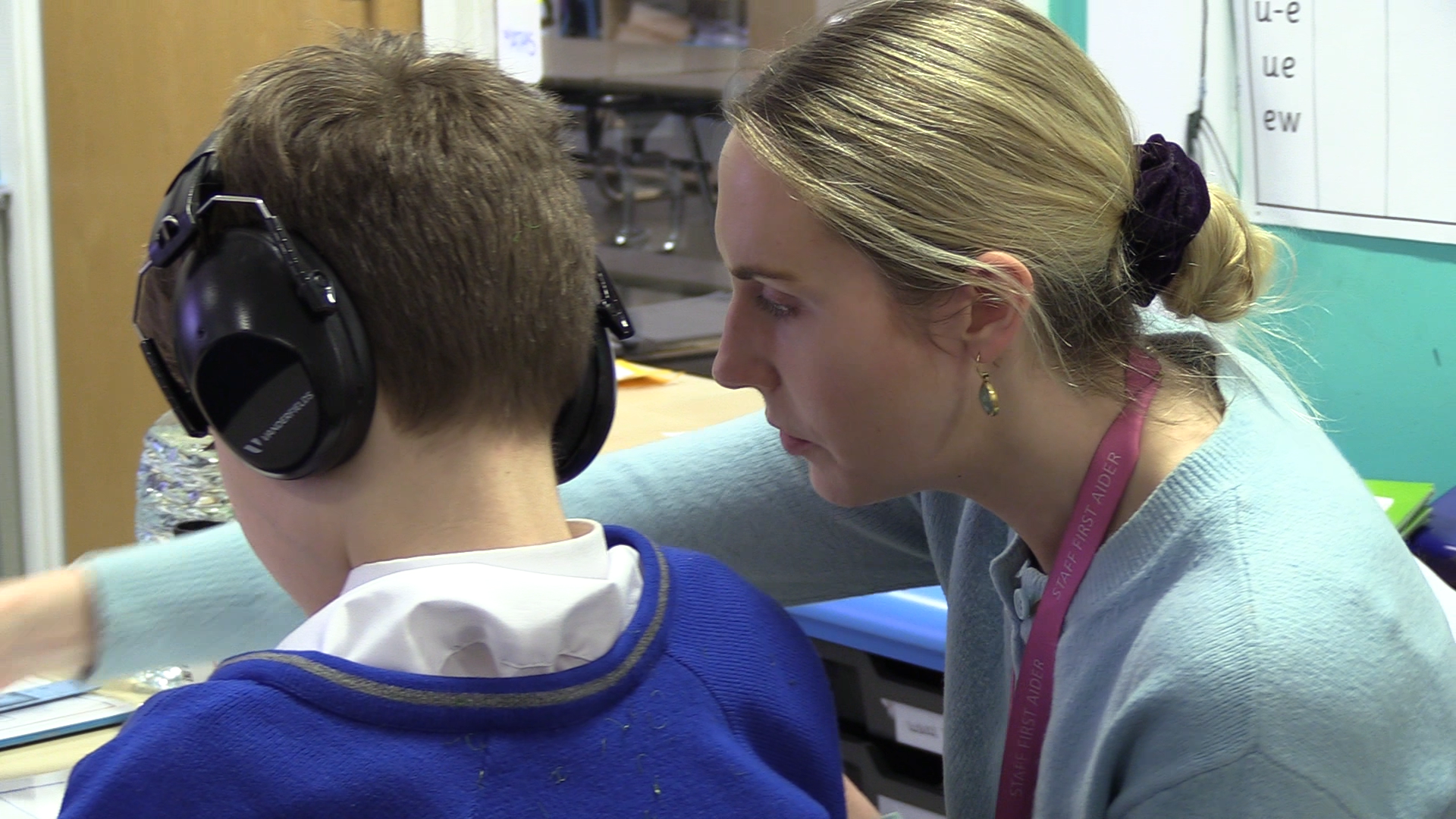
As an all-through school, we know our pupils very well. This enables us to build strong trusting relationships with them and adapt to their specific needs. The reality of the modern classroom means those needs are increasingly diverse. Within one classroom you may have a child with a developmental language disorder who struggles to follow multi-step instructions and a learner with autism who finds social interactions challenging. There might be someone with dyslexia who needs extra support with reading while another with dyscalculia requires physical materials to grasp mathematical concepts. In the same classroom you have a pupil with a visual impairment who needs all their resources printed differently and a child with ADHD who struggles with focus and attention. Add to that a pupil with attachment disorder who needs consistent emotional support to feel secure and you get the idea: it’s a complex picture.
A Complex Picture
Our anecdotal classroom experience is backed up by official government figures. Today, more than 1.6 million pupils in England have special educational needs. This represents an unprecedented 18.4% of the school population (1). These numbers reflect a steady and significant increase. The number of pupils requiring SEN support has grown by 4.7% from 2023 to 2024. It has risen by a massive 24.9% since 2016 (1). Pupils with Education, Health and Care Plans (EHCPs), have surged by 11.6% in just the past year. This is a startling 83.4% increase since 2016 (1). The overall pupil population has grown by 6.2% since 2016, so this nowhere near accounts for the dramatic rise in SEN numbers (1). These statistics are impossible to ignore, but they tell only part of the story.
A Venn Diagram of Needs
If we look at a class size of thirty, on average five to six pupils will have special educational needs. Typically four of those receive AEN support and one or two has an EHCP. However, these categories aren’t neat boxes, they’re more like overlapping circles in a complex Venn diagram. A child with autism might also have dyspraxia, while another with ADHD might struggle with speech and language difficulties. Each combination creates a unique profile requiring individualised support strategies. Our job is to respond to each child’s unique constellation of needs while ensuring they are happy and reach their full potential.
What’s crucial to understand is that these diverse needs don’t just affect academic progress. It also impacts how children experience and engage with school life. Struggles manifest through changes in behaviour when appropriate support isn’t in place or when they’re facing particular challenges. Withdrawal is common. A usually chatty child becomes quiet and isolated, or develops anxiety about coming to school. For others, frustration and overwhelm show as dysregulated behaviours: calling out, angry outbursts or refusing to engage with tasks. In some cases, we see more challenging behaviours that require immediate intervention: damage to classroom resources or physical aggression. Addressing these behavioural challenges must be a priority. It shows that a child’s needs are not being met and it also disrupts learning for others. It’s a delicate balance, requiring us to be both responsive to the individual and the wider classroom community.
Pupils with English as an Additional Language
Adding yet another dimension to the picture is the growing number of pupils who speak English as an Additional Language (EAL). In primary schools, the percentage of pupils with a first language other than English has risen to 22.8% (2). This figure includes any pupil who speaks a language in addition to English, so not all these pupils will have low levels of English proficiency. However, some will, which adds to the changing classroom dynamic. The distribution of EAL pupils varies dramatically across schools. While 22% of schools have less than 1% EAL pupils, in 8.4% of schools, EAL pupils make up over half of the school population (3). Consequently, some teachers are managing multiple layers of linguistic diversity alongside the spectrum of additional educational needs.
The Unique Changing Mix of Individuals
Each year as a class teacher you see an unique mix of needs in the rooms where you teach. Take a hypothetical, but realistic primary classroom. You have four pupils with EHCPs, three children with autism spectrum condition, one pupil who is EAL with low English proficiency and two with dyslexia. Some of these pupils need support for challenging behaviours, some require high levels of academic support, while others need high levels of emotional support. Class profiles are not static, and it is not uncommon for new pupils to join mid-year. Suddenly all your carefully crafted plans need rethinking. You have to reassess how you use additional support from teaching assistants, change seating plans, shift the amount of help individual pupils receive and make adaptations to whole class teaching. As teachers, we are not just managing individual needs in isolation, we are constantly adjusting and balancing support for a dynamic mix of learning differences, language needs, social and emotional requirements.
What’s most effective when managing the complexity of needs in our primary classrooms? While there’s no magic formula, we’ve found that success rests on several key foundations. At Reach Schools, we have a three tiered approach which we call waves. Wave One: high quality inclusive teaching, Wave Two: targeted intervention and Wave Three: specialist provision. The best way to support the majority of our pupils is through consistently excellent Wave One provisions. Here’s what we do.
Understand Each Individual
First and foremost, it is important to really know and understand every child. This goes beyond understanding their formal diagnoses – it’s about recognising their unique strengths, their triggers, what makes them light up with enthusiasm, and what causes them to shut down or become dysregulated. This deep understanding doesn’t happen overnight; it’s a constant process of observing, reflecting, adapting as new challenges arise, and tweaking existing strategies. We’re lucky at Reach, because as all-through schools, there is continuity and collaboration between primary and secondary settings, so we get the privilege of getting to know individuals from ages 4 to 18 really well.
Build Genuine Relationships
The next fundamental step, which goes alongside understanding our pupils, is to build genuine warm and trusting relationships with pupils and their families. This begins as soon as we greet them as they come through the gate in the morning and lasts all day, even through to our after school provision. Every positive interaction between staff and pupils reinforces that sense of belonging.
We’ve learned that you can have access to every specialist resource and intervention available, but without these key relationships, children simply can’t listen, or thrive. When a child feels truly seen, understood, and supported by the adults around them, they’re more likely to take risks in their learning and push through challenges.
Create a Predictable Environment
Pupils with additional educational needs often experience higher anxiety levels and lower tolerance for uncertainty than their neurotypical peers. Creating predictability through clear and consistent routines, boundaries and expectations is another crucial support pillar we use every day. In our classrooms, we invest significant time establishing and practising routines for everything from lining up to transitioning between activities and we always explain the rationale of routines and behaviour expectations so there are no surprises. When children know exactly what to expect, it creates a sense of security that supports both their emotional wellbeing and their learning.
Zones of Regulation
We use a zones of regulation (ZOR) approach to support all our pupils to label, understand and regulate their emotions. There are signs in every classroom that explain the ZORs: these are colour coded so that children can visually understand what they are experiencing. Zones of regulation relate to different types of energy: including sadness, calmness or anger. If a pupil is feeling dysregulated, these help them to identify which zone they are in. Staff can then use the appropriate method of supporting them to move into a calmer zone for learning. We teach all pupils the ZOR approach in PSHE as all of them can benefit from understanding and regulating their emotions.
Focus on Vocabulary
Our highest area of need in the classroom is around speech, language and communication. To ensure that every learner can progress, we have a big focus on vocabulary. Every lesson begins with teaching the essential words for that lesson and we use knowledge organisers to share the vocabulary for each unit with pupils and parents. If there is a particular need, we teach our key words to some pupils ahead of the lesson, so they have the greatest chance of success alongside their peers.
Use Scaffolding
We have an ambitious curriculum at Reach Schools and mostly teach in mixed attainment classes. One of the most powerful tools in our teaching arsenal is skilled scaffolding. Pupils need different types of support to reach the same goal, so we use scaffolding that is tailored to pupils’ individual learning needs. For instance, if a pupil has a literacy difficulty, then we would provide them with scaffolding to reduce the amount of writing they need to do. Or if a pupil has a more limited working memory, we give them a visual aid to help them to remember their next steps. The key is understanding that scaffolding isn’t about lowering expectations; it’s about providing the right temporary support to enable success for all.
Use Visualisers for Modelling
We find visualisers incredibly useful in the classroom. These are small cameras over the teacher’s work, where we show on the big screen what they are doing live. It shows clear modelling of the strategy or task they are teaching. Visualisers allow teachers to break explanations down into smaller steps and to explain their metacognitive thinking. Pupils can see exactly what they need to do in the moment, supporting communication and understanding instructions.

Seek Expert Support
Finally, we’ve learned the importance of knowing when to seek expert support. The range of special educational needs we encounter in today’s classrooms is vast, and we can’t be specialists in everything from dyscalculia to pathological demand avoidance. Working with your SENCO, leadership team, and external agencies isn’t just helpful – it’s essential. Some of our most effective strategies have come from collaborating with occupational therapists, speech and language therapists, and colleagues in specialist settings who have deep expertise in specific areas of need. With that collaboration we can continue to ensure all pupils are included and achieve.
If you would like to stay informed about the latest news in the world of education and how Reach Schools approaches those challenges, we’d love you to join our Reach Out community.
Click here to read Kirsty’s blog about girls in STEM in Teach First on how AI is deepening gender and disadvantage gaps in STEM.
References
1- Special educational needs in England, Academic year 2023/24 – Explore education statistics
2 – Schools, pupils and their characteristics, Academic year 2023/24 – Explore education statistics