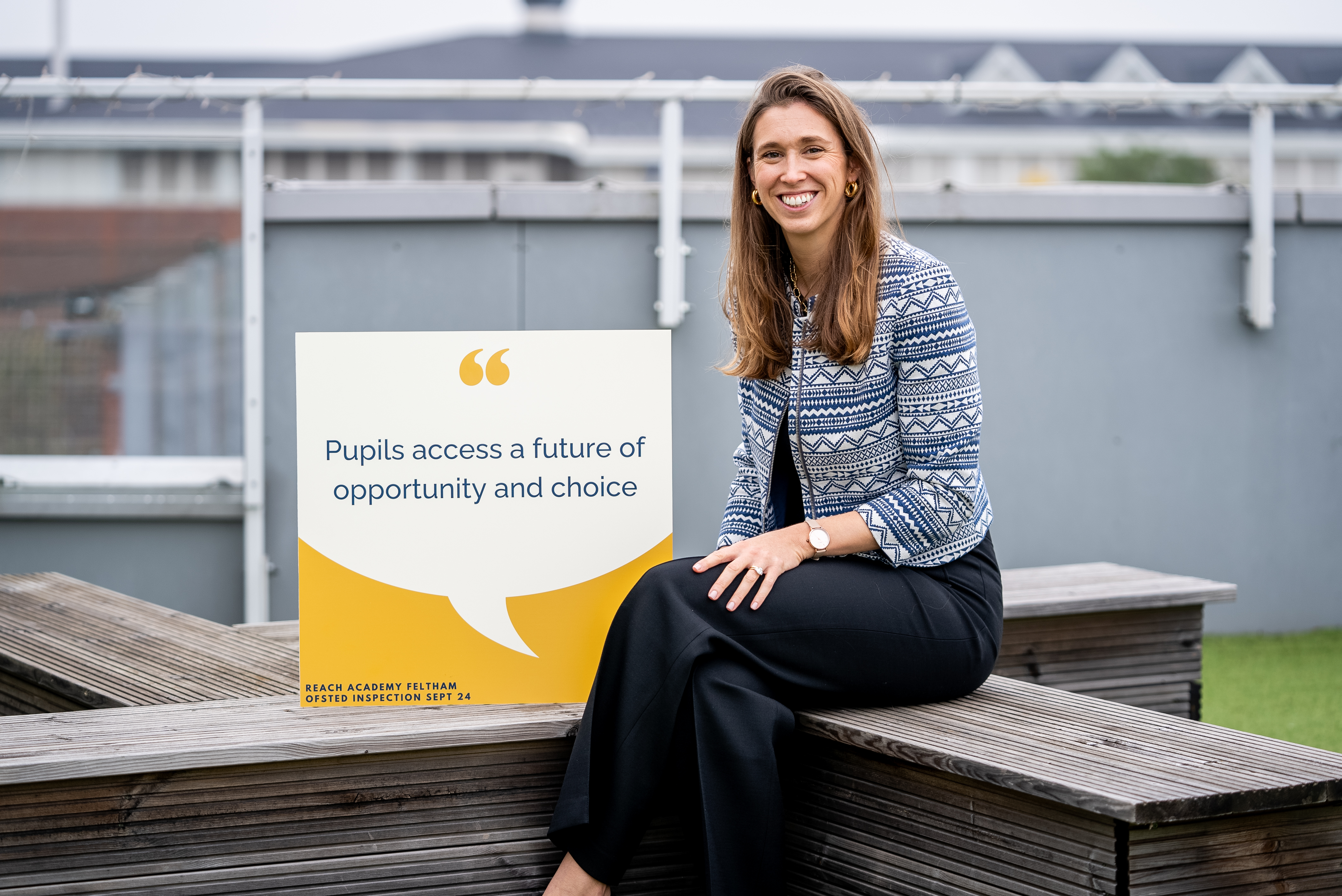
Chloe Sides, Director of Languages at Reach Academy Feltham and Hounslow Hub Lead, Languages For All

The problem: language learning decline
For years, language learning nationally has been in decline. In England, A-level entries for the main modern languages of French, German, and Spanish declined by 40% between 2015 and 2025. The Higher Education Policy Institute (HEPI) described it as a “catastrophic decline” in a July 2025 report* and the British Council’s report, Language Trends England 2025 concludes:
- Modern foreign language GCSE uptake is more than 20 percentage points higher in the most affluent state schools.
- 68% of the least affluent schools face difficulties recruiting language teachers.
- Almost one-third of the most disadvantaged schools have pupils who speak English as an additional language.
- French continues to be the most offered language at Key Stage 3, while Spanish retains more pupils at the age 14 and age 16 transition points.
- Small A-level class sizes are a growing concern; fewer than one-third of the most disadvantaged schools can run them.
“Every child in a state school should have the opportunity to study languages to a high level.”
Michael Slavinsky, Managing Director, Languages for All.
Why does it matter?
For many state schools, the cost of running small A level language classes is unsustainable. Hence what the British Council report says above: ‘fewer than one-third of the most disadvantaged schools can run them’. A misguided perception that languages are “too hard” or “not useful”, compounded by the issue of recruiting teachers in these subjects makes it increasingly difficult for young people to continue studying them beyond GCSEs.
While independent schools may be able to afford classes with a few students, as the British Council points out, this is causing a two-tier system of access to languages. What is morally wrong is that students at state schools in underserved areas are being denied the fantastic opportunities that learning a language can bring both personally and professionally.
Languages open doors to understanding different cultures and help build relationships with people from diverse backgrounds. They also provide an international perspective and understanding, help build confidence and deliver fantastic career options. So, if the decline in language study at a higher level is closing doors to students going on to enjoy this rich future of choice and opportunity, it not only matters, it is crucial to reverse the decline.
Changing the Narrative in Hounslow
In Hounslow, we are pleased to say that a different story is emerging, thanks to a concerted combined effort to change the narrative. Languages For All is the creation of a partnership between the Reach Foundation, Reach Academy Feltham, Royal Holloway, University of London and the Hounslow Education Partnership. It was first piloted here in Hounslow in 2022 and since then has had a fantastic impact:
- The number of students studying A level languages locally has more than doubled: from 35 in 2022 to 81 in 2024.
- The number of state school sixth forms in the borough offering A level languages has tripled, from four to thirteen.
It’s a quiet revolution that is growing, and we are proud to say that it’s being led from classrooms like ours at Reach Academy Feltham.
From a Conversation to Collaboration
The idea for Languages for All began at a Reach Foundation roundtable hosted at Royal Holloway. Educators, university leaders and employers gathered to discuss why fewer students were choosing languages beyond GCSE?
The conversation revealed two barriers. The first was attitude. Many young people felt English was enough, or that a language was too difficult to pursue alongside other A levels. For bilingual pupils, languages often seemed redundant: “I already speak another language, so why study another one?”
The second barrier was access. Even when students wanted to take a language A level, small class sizes made it financially impossible for schools to run the subject and so they were dropped from the course lists, as the British Council had also discovered.
The roundtable group asked: what if schools worked together? Why not pool teachers, share students, and create a shared pathway to make language learning accessible again?
That question was the beginning of Languages For All.
Languages for All’s Leadership
Languages For All sets up local hubs, where schools and universities work together to run engaging, dynamic and affordable A-level modern languages courses. To address the cost barrier, the hubs runs centrally-taught A-level classes, and a local venue such as a school or employer hosts the A-level language classes.
● Schools in the hub pay for their A-level students to attend.
● The curriculum is taught in person and online.
● The Lead School in the hub provides the teachers and quality assures the tuition.
● There are regular meet-ups to build relationships and community among the linguists
Borough-wide Relationships
In our first year, 13 out of 20 secondary schools across Hounslow (and one in neighbouring Hillingdon) joined forces. Reach Academy Feltham took the lead on Spanish, while Chiswick School led on French and we still do this year. Together we created a shared A level model: one in-person lesson each week after school, and one online.
Each school contributes per pupil, making the programme financially sustainable. This simple structure allows every student in the borough who wants to study a language to do so, no matter which school they attend.
Beyond the classroom, students earn the Global Language Ambassador Award through trips, workshops and cultural experiences. So far they have visited Google, Meta, Europe House, and two universities (Royal Holloway and St Mary’s Twickenham). In 2024, we ran two highly successful international residentials, one to Madrid (34 students, seven schools) and Lyon (22 students, six schools).
The results have been transformative. 100% of students say they enjoy connecting with peers from other schools; one in three report a measurable increase in confidence when speaking to native speakers; and 80% say that languages will now help them in their future, up from 61% at the start of the year. And beyond that, the smiles we see on their faces are testament to the importance of their language study.
“Languages are key to relationship building… we want you to engage with authentic and diverse cultural experience… where languages can take you, not just the language in the text book.”
Michael Slavinsky, Managing Director, Languages for All
Building confidence and community
At Reach Academy Feltham, our own numbers tell the story. In September 2024, four students chose to study Spanish and three chose French through LFA tuition. For September 2025, those numbers have risen to nine in Spanish and three in French.
Across Hounslow, sixty-nine Year 13 and forty-two Year 12 linguists are currently completing their Global Language Ambassador Award. Many of these students come from backgrounds where studying abroad or working internationally once felt out of reach. Watching their confidence grow has been extraordinary. As one student reflected after the Madrid trip:
“It’s one thing to learn grammar in the classroom, but completely different to use it in real life — ordering food, asking for directions, speaking with locals. It was the best way to build my confidence.”
Another said:
“I used to think languages were just about communication. Now I see how they open doors — to travel, to careers, to new perspectives.”
For us as teachers, this is what success looks like: not just results, but these personal transformations.
Hear what Oscar, a Year 13 student at Chiswick School has to say about his experiences.
The practical side: coherence and rigour
To make this work, we’ve had to be creative. Some of our lessons are after school. Convincing teenagers to stay until 6pm every Monday is no small feat. By making lessons energetic and relevant, blending grammar, culture, and conversation, students stay engaged and interested.
Collaboration has been key. Working with colleagues at Chiswick, we’ve developed a shared Languages for All curriculum and set of booklets that bring coherence, consistency and structure across schools. Every student receives clear revision checklists, grammar explanations and cultural resources. This rigorous clarity helps all learners feel successful, from those aiming for A*s to those building confidence at grade C level.
What has been amazing is that the students have run with the programme, and done their own research to help support everyone in the community. At our recent Languages for All day at Royal Holloway, two Year 13 students had researched the different syllabuses and expectations of examining boards, as well as useful online languages resources which they shared with the whole Hounslow cohort.
A model for the future
What makes Languages for All special is not just what we teach, it’s how we do it. This model proves that by combining the strengths already within the system: schools, university outreach and employer engagement, we can create a self-sustaining pathway that benefits everyone.
For universities like Royal Holloway, it diversifies their pipeline of applicants and strengthens their local impact. For schools, it makes language A levels affordable and aspirational. For students, it opens up the world to a life of choice and opportunity. For employers, they are developing relationships with future employees.
The Vision
The vision is to build on this success by launching new Languages for All hubs. One is being set up in collaboration with the University of Exeter in the south west, and there are conversations going on with other schools in the north of England too. Connecting even more schools and universities across the UK, will help us achieve our vision of a country where learning a modern language is normal, possible, and valued.
“Collaboration that works in Hounslow can work in many other settings around the country”.
Michael Slavinsky, Managing Director, Languages for All
The Power of Partnerships
We often say that we are the system: we can’t wait to be rescued. Languages for All shows what impact we can have when we work together in partnership. In Hounslow, schools act together, rather than in isolation, building opportunities their students deserve.
The national picture may still be challenging, but here a growing community of young linguists is proving what’s possible and changing the narrative.
Because when you give students the chance to see that languages open doors: to careers, confidence, and connection, they walk through them. And what’s also important: they love it!
*The Higher Education Policy Institute report titled “The Languages Crisis: Arresting decline”
**https://www.britishcouncil.org/research-insight/language-trends-england-2025
https://wales.britishcouncil.org/en/language-trends-wales
Find out more at Reach Out!
If you would like to see more of what we do at Reach Schools, look here. Reach Out is our fantastic community of educators where we share, collaborate and grow together.