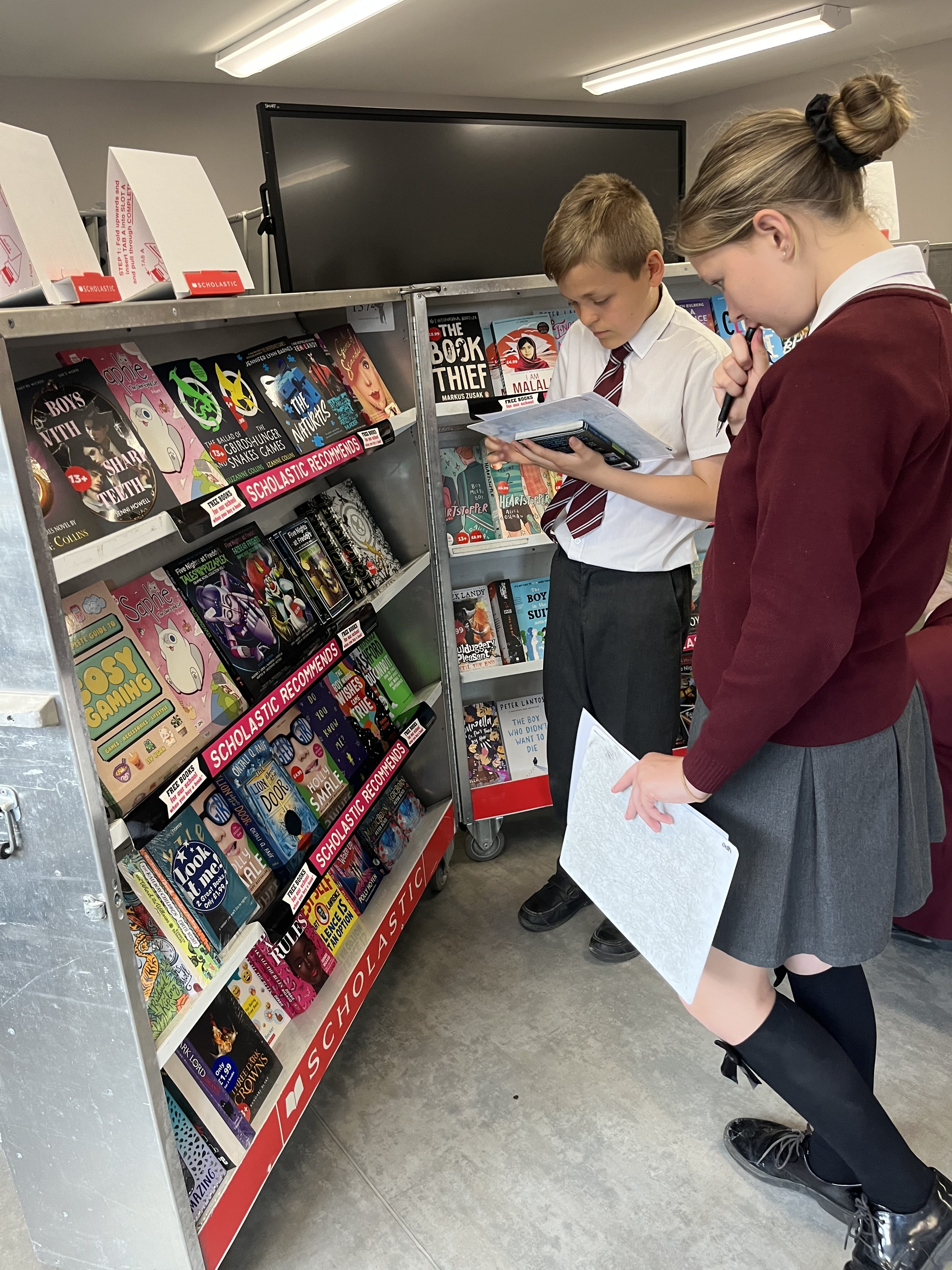

Head of English at Reach Academy Hanworth Park, Lily Staff gives some tips on how to encourage teenagers to develop a love of reading.
By Lily Staff

Getting teenagers to read outside of school is not easy. When phones, gaming devices and streaming platforms are all competing for their attention, it is no surprise that fewer than one in five 8-18 year olds read something daily. Yet half way through the National Year of Reading – a government campaign designed to encourage children and young people to read more – supporting pupils to read more has never felt more important.
Daily reading has always been at the heart of what we do at Reach Academy Hanworth Park, and when we opened the school in September 2024 we set out to build a culture where reading regularly was the norm. All our pupils take part in a reading programme where they are expected to read three different types of text each week outside of school. We knew this was ambitious, but with a cohort of pupils where nearly a fifth were reading five years below age-related expectations, we were determined for it to be a success.
Over 18 months later and we are really proud of our pupils’ successes. Pupils at our school read everyday, both in lessons and outside of school, and more importantly they genuinely enjoy reading, with many now recommending books to friends, debating plot twists at lunchtime and asking each other what they should read next.
‘I didn’t like to read a lot. If I started reading I would give up quite quickly. Now I really enjoy reading and can read books all the way through. I love reading non-fiction books about football and getting lots of facts and statistics from them.’ Ethan
‘I used to think that because I’m dyslexic I wouldn’t get any better at reading, so I never used to read. I really enjoy reading now. I do 30 minutes before I go to bed and I feel really excited to read books – I can’t wait to know what happens next. ’ Madison
‘At the start of the year, I really didn’t like reading but this year has made me realise I actually love it. I read lots of different books now and I look forward to talking about them with my friends.’ Sandalu
Here are my reflections on why the programme has been successful, and some tips for any schools looking to engage KS3 pupils with reading.
Explaining the why
Reading a lot can be really difficult, especially for pupils with weak literacy skills, or those who have lots of access to electronic devices at home. Scrolling on a phone or watching TV will always feel easier than picking up a book. If we want children to read a lot, we need to explain why they should do it. Research shows that reading regularly can increase the likelihood of better exam outcomes, better general knowledge and even support better mental health (Department for Education, 2012). At RAHP we share this research with both children and their families so they understand why we want them to read.
High expectations
It is easy to think that pupils will read regularly once we get them to love reading, but it often happens the other way around: reading regularly sets pupils up to love reading. We expect pupils to read a lot and we hold them accountable for this reading – the more they read, the more they catch the reading bug! Our reading programme expects pupils to read three different types of text every week outside of school: a text of their choice, some non-fiction and most importantly a specific fiction book which the whole year group read.
Little and Often
Many children lack the resilience to complete a book from cover-to-cover, especially those used to fast-paced online content. Schools should set reading in manageable chunks to allow pupils to experience the joy of finishing a whole book independently – an experience which builds their confidence in reading more and more. Pupils at RAHP are expected to read a little bit each day, with particular articles or chapters set to be completed each week. They use reading timetables in their homework planners to organise their time effectively.
Talking about reading
Children and young people derive pleasure in talking about what they have read. By making reading a social experience, pupils experience the joy and excitement of connecting with another person over a book. At RAHP we have built in opportunities throughout the week for children to talk about what they have read together. Our English Morning Meets provide an opportunity for pupils to discuss and debate the text they are reading at home. At family dining, pupils talk about the non-fiction they have read that week and share facts and questions. Every week, pupils stand up in assembly or form time to recommend books to each other. By purposefully building in these opportunities for ‘book talk’, we have created a culture where talking about reading is the norm.
Building interests
Lots of young people feel overwhelmed when they are told to choose something to read: it feels easier to pick up a book they have read before, or a book aimed at much younger children. Of course it is important that pupils should be able to do this (all our pupils spend some time reading something completely of their choice each week), but alongside this it is vital to expose pupils to a range of genres and authors which they may not choose themselves. This year, Year 8 read ‘Girl, Missing’ by Sophie McKenzie as part of our reading programme, which sparked a new love of thrillers across the year group.
Providing support
Children need to feel successful early on when attempting something challenging. It is important to set high expectations with what we want pupils to read, but also to quickly identify pupils who need extra support in order to meet them. At RAHP, we assess all pupils’ reading in the first week of Year 7 and provide a range of interventions specific to each child’s needs. This includes a reading club where pupils can complete their weekly reading with the help of a teacher, meaning these pupils can participate in all weekly discussions and fully engage with our programme.
The Success
Back in September 2024 nearly a fifth of our 90 Year 7 pupils were reading five years below age-related expectations. Since then we have seen fantastic progress in the data and the anecdotal evidence from this cohort. In January 2026 for the now Year 8 pupils, the number reading 5 years below their chronological age had dropped to 4%, while 74% were at, or above, age related expectations. The data speaks for itself, but the most rewarding thing is hearing and seeing these pupils sharing their favourite books and talking about plot twists, character and meaning like true teenage lovers of reading.
Ultimately, transforming pupil attitude towards reading is possible and The National Year of Reading reminds us of our responsibility to continue this work. Schools need to ensure they foster enthusiasm around reading, but also, crucially, hold pupils accountable for the independent reading they do. Of course, this can only be done with a passionate and proactive staff team who see reading as a priority (no matter their subject discipline).
If you want to come and visit us to hear more about our reading programme, then sign up to our next Reach visit day here.