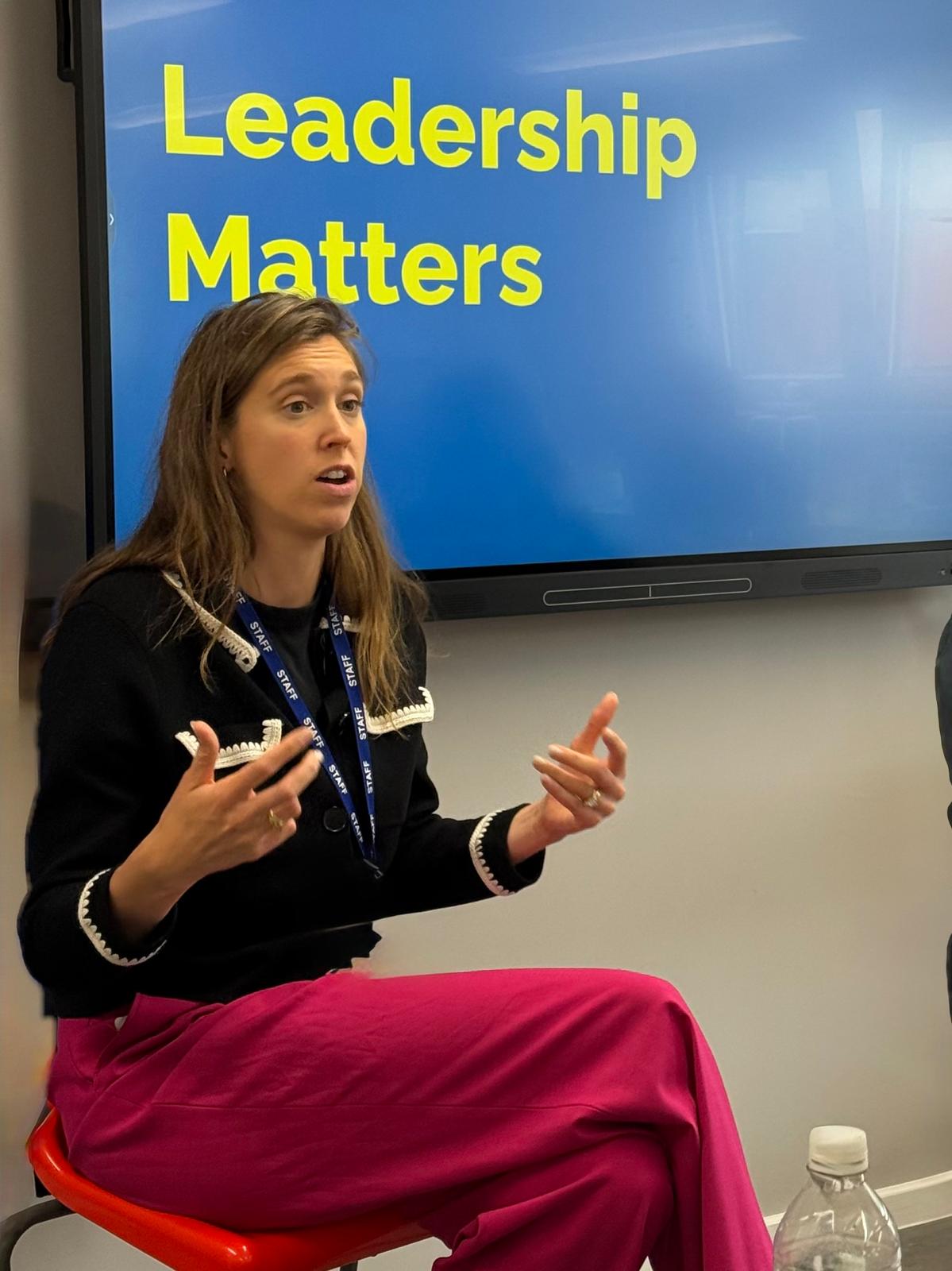
Lily Staff, English lead at Reach Academy Hanworth Park

In September 2024, we opened our doors to our founding cohort of Year 7 pupils at Reach Academy Hanworth Park. Being the English lead at a brand-new school has been joyous, but not without its challenges: in our Year 7 baseline reading assessment, we discovered 19% of the year group have a reading proficiency level of five or more years below their actual age. Many of our pupils didn’t see themselves as readers – reading was burdensome; something which happened by necessity in school and certainly not something they would choose to do outside of school.
Research shows us that pupils who enjoy reading are more likely to go on to have more life choices, achieve better exam results and feel happier. At Reach Academy Hanworth Park, we made a commitment to establish a culture where pupils genuinely love reading, and we know we will have to work hard to close our reading gap in order to do this.
Although we are at the very start of our journey (with a long road ahead), we wanted to share some of our early success at establishing a culture where pupils love reading, and some of the work we have done alongside this to support our current struggling readers. This blog post will focus on the work we have done outside of English lessons.
Our Vision
We have high expectations of our Year 7 pupils, with pupils reading three different types of text outside of school each week: a text of their choice, a non-fiction text and a specified fiction book.
Expecting pupils to read three texts at the same time is ambitious, but we think it really matters. We think it matters that pupils are reading something they love, it matters that pupils are reading about the world around them and it matters that they are reading high quality, appropriately challenging fiction. Part of my job as English lead has been to make this ambition achievable.
It is important that pupils’ text of choice really is their choice. This can be a book aimed at younger children (as you would expect plenty of our year 7s are reading Diary of the Wimpy Kid again), a book they have read before, a graphic novel or any text which brings them joy.
Pupils are also expected to read some non-fiction every week – this could be a book, newspaper article or magazine. Sometimes teachers will provide this reading (e.g. Jess, our science teacher, recently gave the pupils some reading on driverless cars), but most of the time pupils will make their own choices. We want our pupils to ultimately understand complex academic texts so they can succeed in their future studies. Regularly reading non-fiction makes this much more likely.
Pupils also read one specified fiction book each half term at home. This is the same book for all pupils and is provided by the school. In the first half-term, pupils read Pig Heart Boy by Malorie Blackman. This means pupils will be exposed to six high quality books of different genres across the year, and it is a great way of ensuring they are reading appropriately challenging fiction alongside their text of choice.
Family Engagement
At Reach, we work in partnerships with families. We shared our ambitions about reading with families during open events and invited them to feel empowered to join the journey with us. When we did home visits (again, a blog for another time) before pupils started, we discussed, in detail, the importance of reading outside of school. At our summer school in July, we provided all pupils with a recommended reading list alongside information about joining Feltham library and we approached families of pupils who may be reluctant readers and guided them through the reading list with specific recommendations of books for reluctant readers (e.g. Barnes & Noble’s Everyone Can Be A Reader series).
When the school opened in September, families attended a talk about reading where we outlined our vision around the three different text types, shared our reasoning for these high expectations and offered support and top tips. I was also available after the session to speak with families who needed help, and these conversations were important in establishing trusting relationships with the families of our improving readers. I recorded this session and sent it to the few families who were not able to attend the talk.
When pupils receive a copy of the specified fiction text they are reading at home, I also provide a booklet about the novel to support families. These booklets provide a reading timetable (so families know which chapters pupils should read each week) and discussion questions to go alongside the novel and promote family book talk.


Intervention
We knew that our ambitions around reading at home would only be achievable alongside high quality intervention for our readers who are furthest behind.
In order to ensure that all pupils can take part in our English ‘Morning Meets’, I run a weekly reading club after school where I facilitate the reading of the specified fiction text in a small group setting. This club has allowed our improving readers to engage enthusiastically in a high quality text and to feel really successful in weekly discussions, which means they feel the benefits and are pleased to attend.
Alongside this, we are using Reading Plus, an adaptive online reading development programme to support our improving readers. Reading Plus is designed to improve silent reading fluency, vocabulary and comprehension. Pupils have choice about what they read (with a wide variety of fiction and non-fiction) and this reading is personalised according to their own comprehension level – the complexity of the texts increases as they move through the programme. It has been a great way of engaging our improving readers with non-fiction texts (who do their weekly non-fiction reading on Reading Plus) and these pupils have then felt successful in non-fiction discussions at lunchtime. The programme also uses a guided window to guide pupils’ eyes across the page and develop stamina. Every morning, pupils are invited to our free breakfast club where they can eat breakfast and then spend 30 minutes using Reading Plus. Merits are awarded to pupils for attending the club and certificates are given as pupils move up each level. A select group of these pupils then stay for an after school session once a week where they are given specific support in using the programme successfully by a tutor fellow (graduate teaching assistants).
In our initial assessments, we found that there was a small group of pupils who could not decode and needed phonics intervention. We know that teaching of systematic phonics is essential in developing reading skills. These pupils take part in daily phonics delivered by our tutor fellows.
We are at the very start of our journey, but we’re proud of our success so far: our pupils are reading regularly outside of school and are genuinely excited about it. We know our journey is not over yet and won’t be until all our pupils are reading for the sheer joy of it – whatever it takes.